Showing posts with label history. Show all posts

Thursday, September 20, 2018

Tiburon: The Most Beautiful Part Of The Bay Area You've Never Heard About

I was lucky enough to spend a month staying with an amazing friend living in Tiburon this summer - a stunning area only five or six miles from downtown San Francisco, with unbeatable views across the Bay of the iconic city skyline, and the added bonus of a warmer microclimate (which feels like a blessing as you watch the fog roll in over San Francisco)! Living 'as a local' gave me some unique insights into this secluded and often-overlooked part of the Bay Area...


Tiburon is located on a peninsula extending into San Francisco Bay in the exclusive neighbourhood of Marin County. It's only a half hour ferry ride via Blue and Gold Fleet ($12.50 each way) from downtown San Francisco but a world away from the city. I absolutely love the Victorian architecture, funky shops, creativity and intellectual hippy vibe of San Francisco, but Tiburon is the perfect respite if you're looking for a slower pace of life.

You probably won't find a single piece of litter on the ground or see any homeless people. Instead you'll find a compact town centre consisting of perfectly manicured public streets, quaint wooden houses, fashion boutiques, wine-tasting rooms and restaurants. Oh, and the occasional deer just strolling through a carpark or casually crossing the road!

San Francisco skyline in the fog

There's even a tiny bit of nightlife in the form of an excellent bar named Sam's Anchor Cafe which stays open until the last person leaves (believe me, we tested this!). But how is it that Tiburon has gone under the radar to so many for so long for so many people except for those in the know?

Many tourists who want to avoid staying in San Francisco itself opt for the charms of the slightly larger Sausalito, which has a similar Old World atmosphere to Tiburon. Like Tiburon, Sausalito is connected to the city by ferry and cyclists seem to love it because they can do a round trip over the Golden Gate Bridge from there (admittedly with a few scary-looking road sections of the route with no cycle lanes). Being a larger town, it's better equipped for tourists and is closer to the Golden Gate Bridge (although you can see the top of Golden Gate Bridge from the peak of the hill in Tiburon).

Even Tiburon Fire Station looks like some kind of adorable toy-town building

Since Tiburon is smaller it has fewer facilities than Sausalito, and also (deliberately) the town has avoided going down the Airbnb route. There are only a handful of places you can actually stay there, the main ones being an upscale, slightly retro-looking tavern with a large (heated) outdoor dining area, The Lodge at Tiburon (around $224/night) and the Mediterranean-looking Water's Edge Hotel, right in Main Street, (around $299/night). The latter is a popular wedding reception venue.

Catching the ferry
So yes, it'd be fair to say this is an exclusive neighbourhood (I completely geeked out when I learned the amazing Robin Williams used to live here). However, that doesn't mean that the locals are aloof. Everybody I walked past on the road (with the exception of right in the centre, which is packed with day visitors) looked me in the eye, smiled and greeted me warmly. Some stopped to chat and ask where I was from (which is always difficult to explain because I've now lived in seven countries on four continents!). There wasn't an air of feeling unwelcome as a foreigner, everybody seemed pretty relaxed and happy to be living in such a beautiful and safe neighbourhood (crime is almost non-existent here).

In case you're wondering, the name Tiburon means 'shark' in Spanish. The area was named 'Punta de Tiburon' by Spanish explorers in the 1800s. It later became a major rail hub on the North Pacific Railroad. The line has been pulled up since then and turned into a lovely walking route (see below).

The highlights of Tiburon 


Main Street

Every Friday night Main Street is closed to traffic and fills up with live music and al fresco dining from 6pm-9pm. The gorgeous wooden buildings were created between 1870 and 1920. It's a short street but lovely to wander down.

Main Street, Tiburon

Old Saint Hilary's Church at 201 Esperanza Street (on the hillside)

"It looks just like something out of Little House on the Prairie!", exclaimed one of my friends when they saw my photos on Instagram. And it's true - this beautiful, gleaming white gothic church was built in 1888 and looks like it could have been in an old Western, or maybe in WestWorld! It fell out of use and was de-consecrated but the church and surrounding land was preserved by a group of residents.

Old Saint Hilary's Church

Hiking near the church

There are a number of short trails between the centre of Tiburon and Old Saint Hilary's Church, extending up over the hillside behind it. Apparently these beautiful golden hills are under threat because somebody wants to build a housing development here - let's hope that never happens, as it would be a major loss for locals and visitors alike.
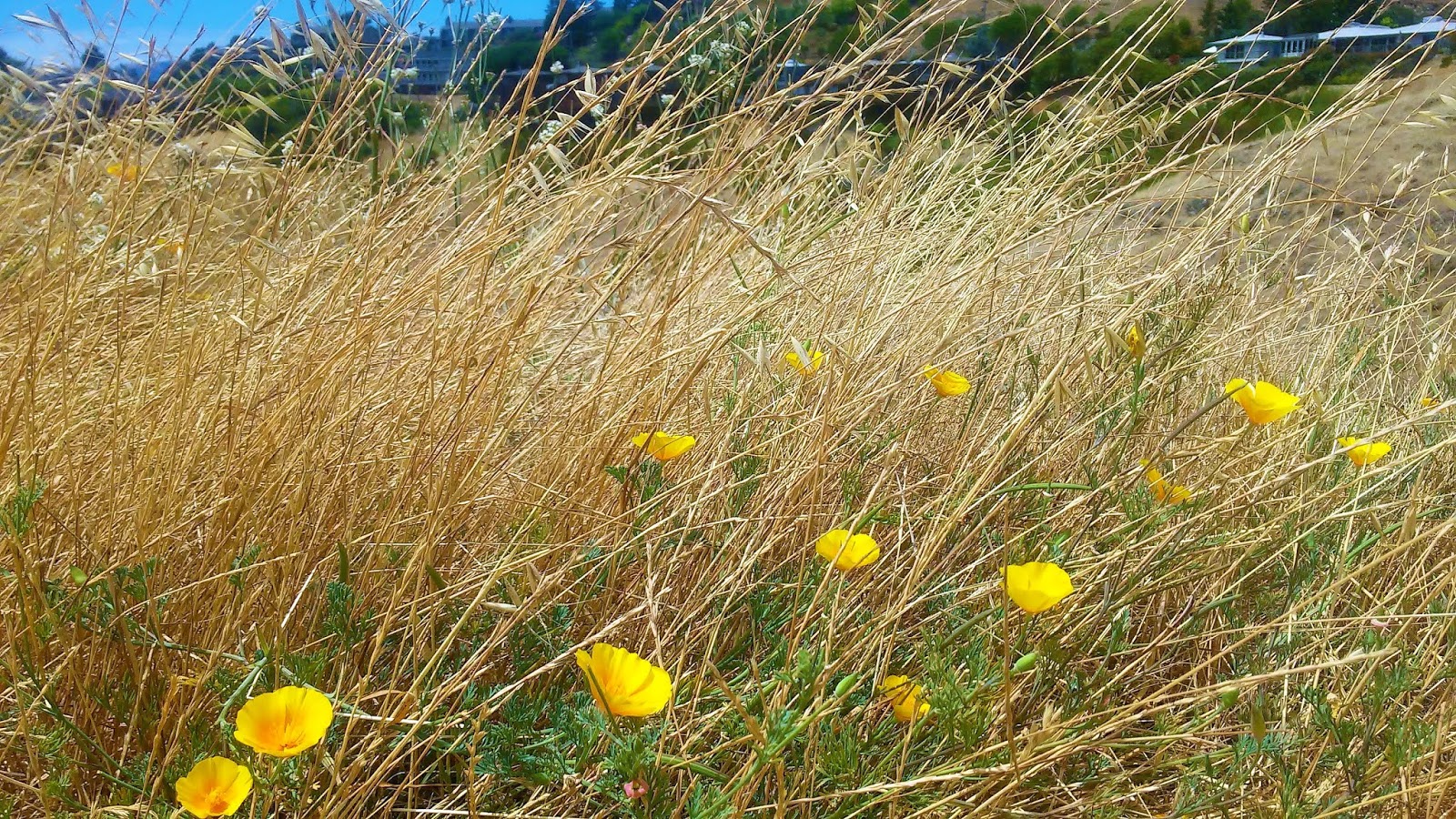
Beautiful long grass and wildflowers on the hillside

Ark Row

This is a collection of huge wooden house boats that artists and other bohemian types docked at Tiburon Lagoon in the late 1890s. The inlet and much of the area was reclaimed from the sea, so nowadays these houseboats permanently grounded at the water's edge. Also check out 'the China Cabin', which is an ornate wooden ballroom rescued from a former steamer, the SS China.

Ark Row/China Cabin

Tiburon Linear Park and Blackie's Pasture

This track is much longer and more impressive than the short Shoreline Park, although the tiny Shoreline Park does offer great views of downtown San Francisco and Angel Island. Follow the former railroad tracks right from the town centre along the coastline. There are display boards along the way featuring historic photos and etchings of how the area used to look. It leads to Blackie's Pasture, which is a wide open space with a playground and picnic areas. Blackie's Pasture is named after a horse that was loved by the local community and was always seen standing surveying his kingdom. Despite being swaybacked he lived to the grand old age of 28. A statue of Blackie was erected in the field in his memory, which I thought was rather touching.

A much-loved former Tiburon resident

Tiburon Playhouse

This has to be the cutest cinema I've ever seen. It's a wooden building painted in sky blue with a white trim and has three small screens inside. Although it looks like it should be an arthouse cinema is plays all the mainstream releases.

The cutest cinema in the world: Tiburon Playhouse

Sam's Anchor Cafe

This Tiburon institution was originally opened by Sam Vella, an immigrant from Malta, in the 1920s. Rumour has it that Sam's was full operational even during Prohibition! There's a trapdoor in the floor that they used to sneak whisky through from the boats. It still has an amazing atmosphere and is particularly busy at weekends, when the outdoor terrace is crammed with people enjoying it!

The outdoor deck at Sam's fills up at the weekends!


Ferry to Angel Island

When you're looking at Angel Island from Tiburon it appears as if it's part of the headland but in fact is separated by the sea. Go cycling or hiking here, or maybe check out the museum which explains its history. It used to be where new arrivals to the USA were processed and made me wonder if my great-great-great uncle (is there another 'great in there?) who emigrated to San Francisco during the Gold Rush ever set foot here. I remember my grandmother showing me a letter he wrote from here to relatives back in Lincoln in beautiful hand-writing. There is a regular ferry service between Angel Island and Tiburon.

Angel Island is in the background, and to the far right is downtown San Francisco

There's so much more to say about what makes Tiburon so beautiful but I'm going to leave it here for now. It's definitely worth checking out, perhaps for a day trip from San Francisco, especially if you like a slower, quieter pace of life. Most of the town shuts down by 9pm, which gives you time to admire the lights of San Francisco on a clear night, or watch the fog rapidly rolling in from the sea to completely hide the city from view. 

Saturday, May 19, 2018

Loama Resort Maldives: From History to Whale Sharks!

Hooray! A Maldives resort that genuinely showcases the cultural heritage of the country in a way that's interesting to guests! What's more, Loama Maldives Resort at Maamigili has something else up it's sleeve and the clue is in the name: Maamigili is one of the top spots in the country for observing whale sharks. 


Culture and sun-worshipping don't usually go hand in hand!

I don't know about you but just those two facts alone were enough to get me excited about Loama. And it gets better...


This is teardrop-shaped island lying in Raa Atoll, a 45-minute seaplane ride from the international airport. It's 100 hectares of a delightful paradise. The island tapers off into a stunning sandbank you can stroll along. If you're looking for a balance between luxury and culture, look no further.

The resort has all usual the trappings of an entry-level five star Maldives resort. By saying 'entry-level' I don't intend to sound condescending, what I mean is it has a high level of amenities and service but in the Maldives there can be a great deal of disparity between five stars, this is the country where you can pay $200 a night or $50,000 a night for a five star resort.

The colours really are this amazing in reality...
So, at Loama you can find luxurious beach and water villas, excellent service and superb cuisine, just like one might expect at any five-star resort. However, Loama offers a cultural experience currently unlike anything else in the Maldives, which is excellent for anyone wanting to see a new side of the Maldives.

Starting at the beginning...Accommodation


Very attractive interiors
The water villas fan out across the water, each with private direct access into the sea, while the beach villas are nestled on the powdery white sand, surrounded by lush tropical foliage. All of the villas are beautifully furnished with contemporary amenities, local artwork and the modern facilities including Nespresso machines, flatscreen TVs and DVD players. A few of the features, such as the room decor and main dining pavilion, seem to have been inspired by the villas at Four Seasons (in my mind anyway) and there's certainly nothing wrong with that. One of the nice features of the water villas is a hammock slung over the water.


The range of restaurants include a spectacular poolside dining venue, Iru Café, all-day beachside dining with flavours from around the world at Fazaa and the gorgeous fine dining restaurant, Thundi, featuring authentic Thai cuisine accompanied by wines from the adjacent wine cellar...


The juicy bit...History!


Loama Resort is the only place outside of the capital city with a licence from the government for a museum, packed full of fascinating artefacts discovered on the island and surrounding area, from 17th Century Chinese pottery brought by ancient traders; traditional clothing and even drinking tankards used by the Portuguese during their time governing the Maldives. 

One of the highlights is the archaeological remains of two traditional Buddhist ceremonial baths dating back to before the 11th Century (which was when the country converted to Islam). There are very few surviving Buddhist relics in the Maldives so this is really unique and rare. 


A traditional Maldivian home with carved wooden wall panels and a coconut thatch roof has been recreated to give guests a taste of how islands used to look centuries ago. There are also fascinating cultural tours to neighbouring islands where guests can discover about the way of life in Maldivian communities, and the Loama Art Gallery featuring work by talented local artists.

A lot of thought and care was put into all of these cultural offerings (unlike some other resorts which merely pay lipservice to them), so it's refreshing and exciting to see that Loama is unlike any others. 

The ancient bath from the Maldives' Buddhist days...

Back to the usual resort stuff...


For a change of pace, check out the Watersports Centre which offers a host of exciting watersports including jet-skiing, windsurfing, kayaking and snorkelling. The attractive house reef is home to all kinds of colourful tropical fish, with the occasional stingray or baby shark gliding through from time to time. 

Adjacent to the Watersports Centre is the TGI Dive Centre, offering a five star diving service. Guests can book full day or half-day scuba diving excursions or learn to dive in the crystal-clear waters of the lagoon. The beautiful infinity-edge swimming pool provides further entertainment for water-lovers.

The Sunset Champagne Cruise
Other excursions available include fishing trips and a romantic sunset dolphin cruise, accompanied by glasses of champagne and canapés. I checked this one out and it was really fantastic. Romantics will also enjoy the private dining option, where a private meal for two can be set up on the sandbank under the stars (although all resorts offer this).

For the ultimate in relaxation, experience the Loama Spa. The skilful spa therapists are on hand to offer relaxing and revitalising massages, scrubs and other treatments using essential oils and natural plant extracts. They really do know their stuff and there's nothing like ended a day with a massage...

Days always end with stunning sunsets but this one was even better than normal


Wednesday, November 23, 2016

Unexplored Maldives...The best spots!

It's been such a busy year! Here's one of my recent articles about some of the less well-known spots to visit in the Maldives, hope you enjoy it! This includes a magnificent shipwreck, an enchanted lake, a WWII military base, a mini Garden of Eden and a breath-taking island of black and white pebbles. (That's right, not every beach in the Maldives is made up of pure white coral sand - OK, 99% of them are, but that's what makes this one so special!)


Wednesday, November 5, 2014

Beyond the beaches: Historical finds in the Maldives

There's a lot more to Loama Resort Maldives than meets the eye! (Although it's pretty easy on the eye, isn't it?)


The Maldives is better known for its beaches than its historical sights (and let's be honest, rightfully so) however it brought a ray of sunshine into my day today to read some ancient baths had been uncovered during construction of a new resort at Maamagili in Raa Atoll. Thankfully the resort, Loama Resort Maldives, recognises not just the historical significance of this discovery but also the appeal it will hold for its visitors and hence has decided to preserve the 'vevu' as it's known in the local language (Dhivehi).


It's too easy to write-off travellers in the Maldives as only being interested in getting a good suntan (or more recently perhaps taking as many trophy photos as possible) but in fact there's a significant percentage of tourists I've come across who are eager to learn more about the country's culture and history. This isn't just limited to the guesthouse patrons (who shouldn't be pigeonholed either). Just chat to any Maldivian resort butler or F&B attendant about how many questions they get asked about their home country by curious guests. Look at the number of cultural excursions that get booked up at resorts motivated enough to put them on their programmes. And think about the number of guests who eagerly gobble up Maldivian cuisine on 'Maldivian night' and are enthralled by 'bodu beru' (traditional drumming) performances.


As it turns out, the 'vevu' at Loama dates back to the Maldives' pre-Islamic era, so that's pre-1153AD (when the Maldives converted to Islam). Before 1153 The people of the Maldives were largely Buddhist (with some Hindus also). There are several Buddhist stupas (an estimated 59 according to historian Hassan Ahmed Maniku), ruins of temples and other archeological remains lying under mounds of sand and vegetation on other islands in the Maldives.


Returning to the recent find at Loama, announcing the news on the Facebook page the resort said;

"Vevu were used as public baths and later for ablution. Sandstone used in the construction of Vevu points to the pre-Islamic period, and the symmetry of the two wells suggest it may have been part of a temple. 

"Vevu are constructed by layering sandstone blocks approximately a metre below the water line till about half a meter above ground. There is an octagonal ledge cantilevered at low tide level for people to access the well."

It's appropriate the resort's slogan is 'Yesterday's heritage, today's culture'. According to their website they seek to promote Maldivian history and culture, promosing guests: 

"A nation’s culture is best reflected in its people’s way of life, and this is what the resort seeks to capture in all its natural glory. Watch the artisans of today bring age-old craft to life, experience ancient rituals and customs first-hand, and immerse yourself in the old world of Maldivians going about their daily routine, untouched by the passage of time."


It genuinely sounds intriguing to me. I've noticed an increasing number of resorts in the Maldives cottoning on to the demand for cultural activities just over the past five years; Dusit Thani's 'artisan village' and the mini-museum at Velaa Private Island to name just two recent examples. As a history-lover I say hooray for that. The Maldives has a fascinating (albeit fragmented) cultural heritage to discover if you dig a bit deeper.